Echoes of Home
By Skye Walker
Broadcast 8.13 & 8.16.2025
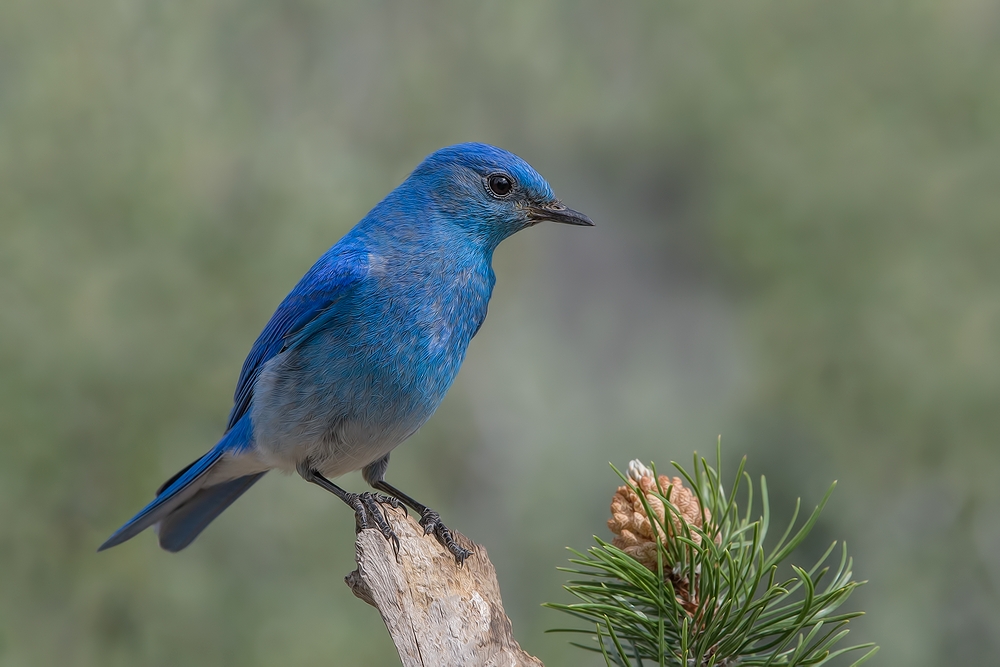
Male Mountain Bluebird. Photo by Elaine R. Wilson, CC by-SA 3.0, naturespicsonline.com.
Listen:
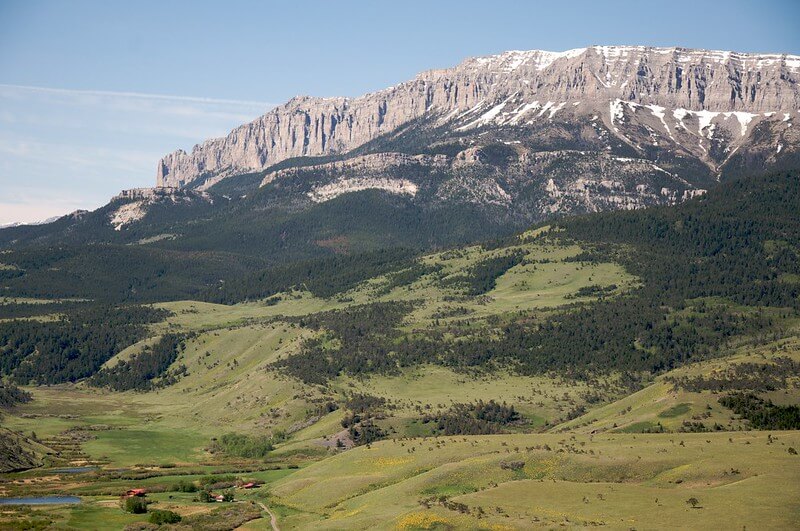
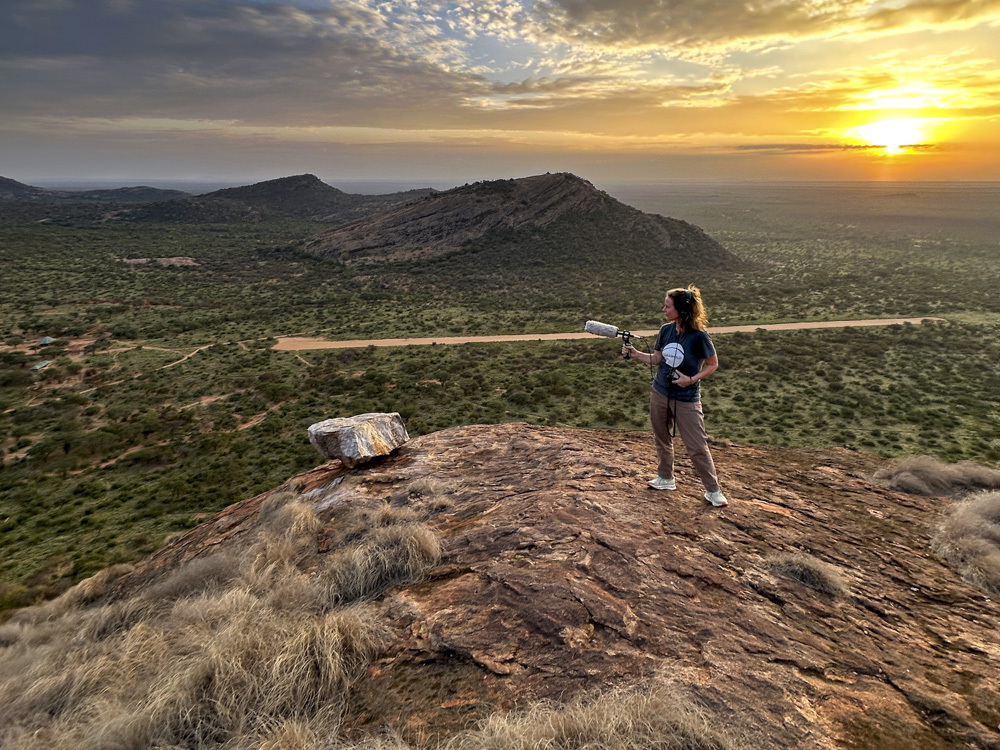
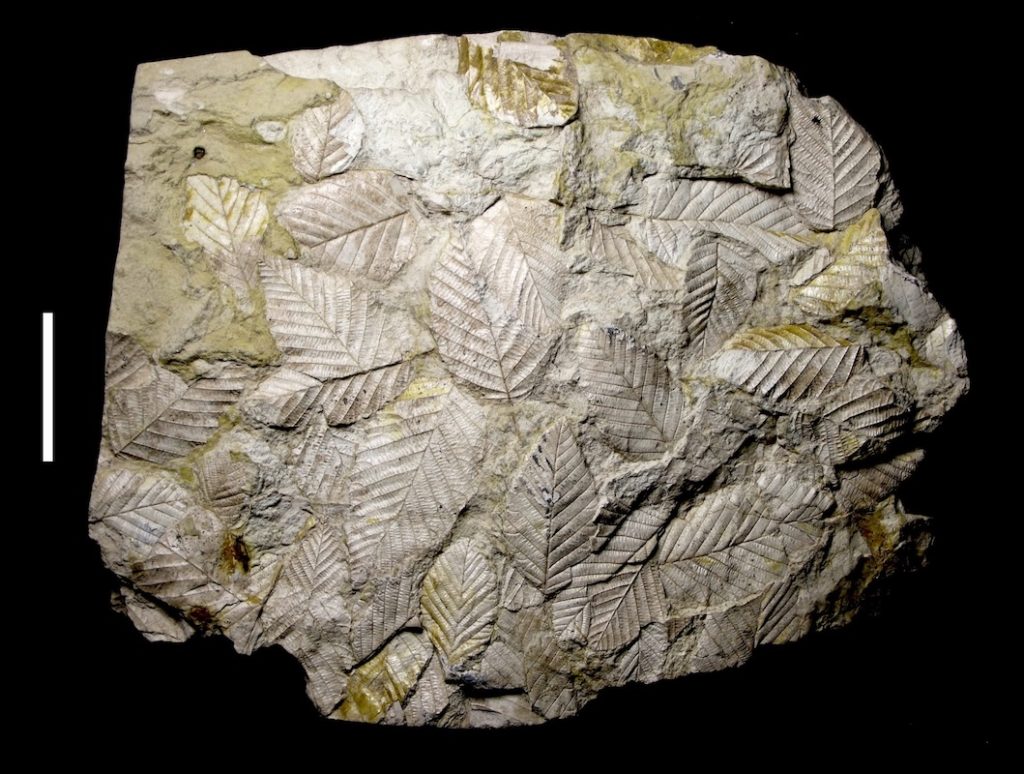
Every summer, I travel from Alabama to Montana to spend two months excavating dinosaurs. Our camp sits on the side of Mount Maurice, part of the Beartooth Mountains overlooking Red Lodge. It’s a long way from home, but this rugged, beautiful place has become a second home of sorts. Here, I get to immerse myself in the prehistoric past, unearthing fossils while surrounded by vibrant wildlife. Bears meander through the woods, rabbits dart between the bushes, and stoats peek curiously from the undergrowth. But it’s the birds that always catch my eye.
This summer, I was sitting on the porch of my cabin one evening with my team. The sun was getting low, at the beginning of golden hour, as we chatted and laughed about the day. In the trees above us, a flash of color got my attention—a pair of mountain bluebirds flitting about the treetops. It was easy to distinguish them; their colors were striking—the male’s feathers a bright azure and the female’s more earthy. We found it fascinating to watch them, knowing they had a nest nearby in a birdhouse on the camp’s flagpole.
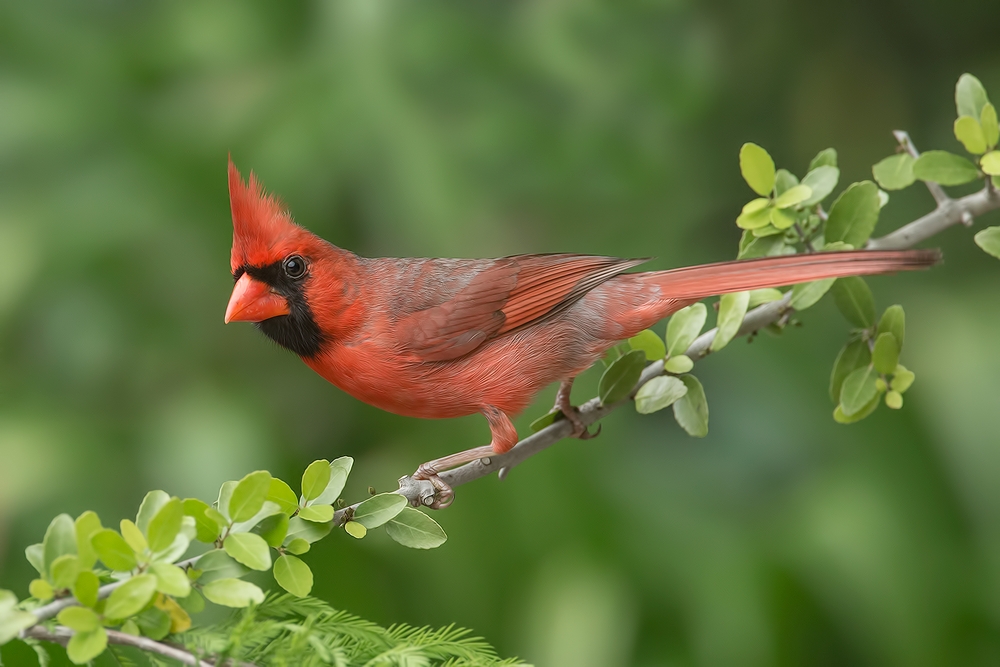
Male Northern Cardinal. Photo by Elaine R. Wilson, CC by-SA 3.0, naturespicsonline.com.
As I watched these mountain bluebirds, likely catching those pesky mosquitoes for their dinner, I felt a familiar comfort in their presence. They were a reminder of the life around us even as we unearthed the ancient bones of their ancestors. Maybe another part of that comfort was that these little birds reminded me of cardinals—the small red birds I love from my home state of Alabama. While mountain bluebirds are common in this rugged, mountainous terrain, cardinals thrive in warmer climates with dense forests and shrubs. Even though I’ve never seen a cardinal here, their memory often follows me in moments like this.
Growing up, I always heard that cardinals were the “spirits” of passed-on loved ones, visiting to let you know they were nearby and watching over you. I’ve never considered myself to be particularly religious or spiritual, but I can’t help but think of my late grandmother and great-aunt when I see a spark of red among the green in the forest. Sometimes it really does feel like they are there, as familiar flashes of red in the trees. There’s comfort in this, even as I know, realistically, it’s simply a bird going about its day as I am mine.
Still, it’s in those quiet moments that nature seems to blur that line—a line between symbolism and realism. Cardinals, bluebirds, or any parts of nature, really, all hold meaning for us when we give it to them. Their existence becomes part of the stories we create about ourselves and the people we love. In this way, they become more than just birds. They become messengers, reminders, echoes of something greater. That “something” could be a memory, connection, or a sense of wonder at the natural world. Perhaps all three.
As the mountain bluebirds disappeared into the trees that evening, I found myself reflecting on my connection to both Montana and Alabama. Both places have shaped me in different ways—one as a home I’ve grown up in, the other as a home I return to each summer. Though cardinals are not found in Montana, their memory bridges a gap, connecting the places and people I love. The mountain bluebirds, in their own way, carry the same message: even far from home, nature offers us connection and comfort.
At that moment, the bluebirds were a living connection between the ancient creatures I study and the vibrant world they left behind, a bridge between the fossils beneath my feet and the twilit skies above me. As the last light faded, I rose from the porch and walked back into my cabin. The air was cool and still, the mountains silhouetted against a deepening sky. Behind me, the bluebirds’ calls echoed through the trees—faint, familiar, enduring—like a quiet reminder that life continues.
Every week since 1991, Field Notes has inquired about Montana’s natural history. Field Notes are written by naturalists, students, and listeners about the puzzle-tree bark, eagle talons, woolly aphids, and giant puffballs of Western, Central and Southwestern Montana and aired weekly on Montana Public Radio.
Click here to read and listen to more Field Notes. Field Notes is available as a podcast! Subscribe on Apple Podcasts or wherever you listen to podcasts.
Interested in writing a Field Note? Contact Allison De Jong, Field Notes editor, at adejong [at] montananaturalist [dot] org or 406.327.0405.
Want to learn more about our programs as well as fun natural history facts and seasonal phenology? Sign up for our e-newsletter! You can also become a member and get discounts on our programs as well as free reciprocal admission to 300+ science centers in North America!