 Book Review:
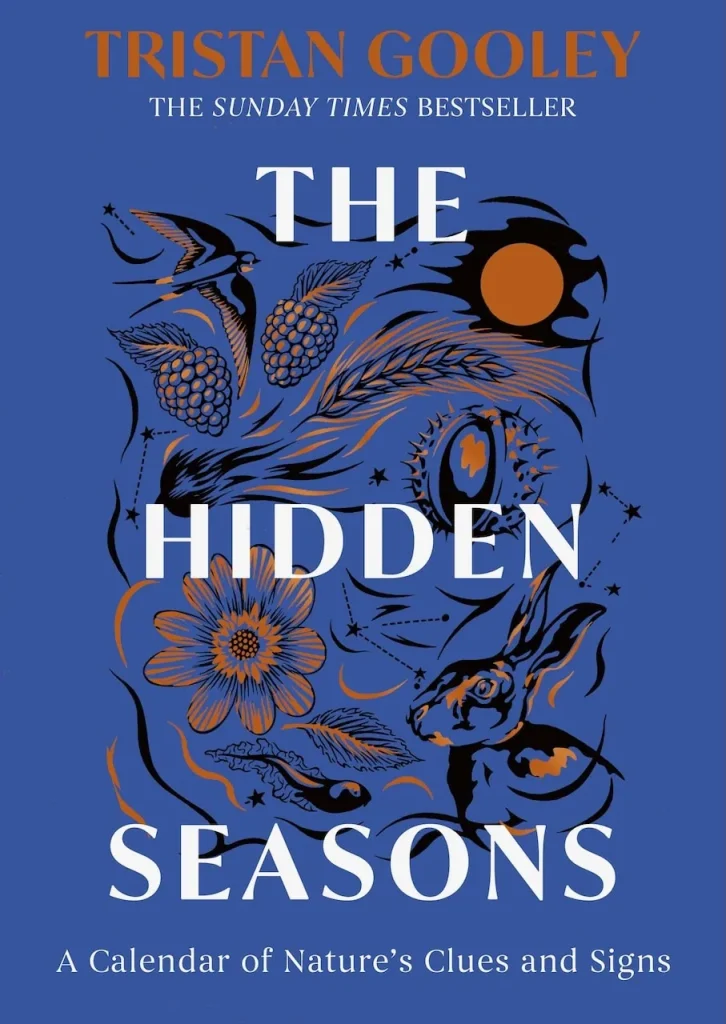
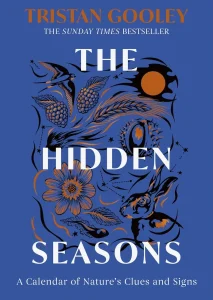
The Hidden Seasons: A Calendar of Nature’s Clues by Tristan Gooley
Reviewed by Mary Ann Reuter
The BBC calls author Tristan Gooley “the Sherlock Holmes of nature,” and the characterization is not far off. A self-described nature navigator, Gooley strives to help readers learn the micro-seasons hidden within each day in his latest book.
As with his other books, The Lost Art of Reading Nature’s Signs, How to Read Water, The Secret World of Weather, How to Read a Tree, and more, Gooley explores the mysteries of science and nature in The Hidden Seasons with a detective’s flair for observation, deduction, and prediction.
Meanwhile, his conversational writing style makes me feel like a wide-eyed kid mesmerized by the lively storytelling of a brainy wizard uncle. Gooley’s uncanny memory of facts and the ability to weave them into the context of “why-this-matters-to-you” is truly magical. While you might be tempted to read this book cover to cover, don’t do it.
The chapters are arranged from late February to early February because, as he explains, “The natural year has no formal start date but if we know what to look for, the second half of February is when we see the wheels turning.” However, seasonal observations are not limited to a single month, so Gooley shares the best times to seek out clues and signs in nature. He also reveals why they appear when they do and why that sometimes varies.
February is indeed a liminal time of year, ushering winter into spring. But I took the author’s suggestion to start where you are when observing micro-seasons. I jumped right into May, my favorite time of year, inspired by essays like “The Dawn Chorus,” where he reveals that birds sing in order by species in the early morning and “Blossom,” about the white flowers of hawthorne trees as a clue that spring is easing into summer.
In explaining the difference between a naturalist and a navigator, Gooley suggests they approach the challenge of finding a particular species of plant or animal from different directions. While a naturalist heads to the habitat they know the organism prefers, he says, “Nature navigators let the organism tell us about our habitat and this makes a map for us.”
More than Sherlock Holmes, I picture Tristan Gooley as an adventurous Indiana Jones, map in hand. While many of the personal anecdotes in the book take place in his native United Kingdom, Gooley has led expeditions on five continents, climbed mountains on three, and sailed and flown solo across the Atlantic. He’s a hands-on interpretive guide to our world.
Gooley’s intimate knowledge of the seasonal changes in plants and trees, wind and water, birds and fungi, and sun and stars, makes every chapter a phenologist’s dream. His keen observations and explanations of micro-seasons remind me of the “in between” seasons on the Celtic Wheel of the Year. There, Imbolc, Beltane, Lughnasadh, and Samhain join the familiar four seasons of Ostara and Mabon (spring and fall equinoxes) and Litha and Yule (summer and winter solstices). And each is a magical sensory experience of sight, sound, and smell – best savored every moment of every day.
As Gooley concludes at the end of the May chapter, “We can encourage ourselves to notice more, to be more attentive, if we nurture the knowledge and in turn, confidence to believe we will understand what we see.” The nature navigator suggests that scientific observation and explanation go hand in hand. “Thought and attentiveness can feed each other,” he says.
Spoken like a true wizard uncle. Gather around him and prepare to be enchanted by this spellbinding book.
Mary Ann Reuter is a retired marketing professional who loves reading nature books and writing articles about the natural world. She is a graduate of the Montana Master Naturalist program and also the Wild wonder Foundation nature journaling educator program.