Whortling Along with Whortleberries
By Allison De Jong
Broadcast 8.12 & 8.15.2026
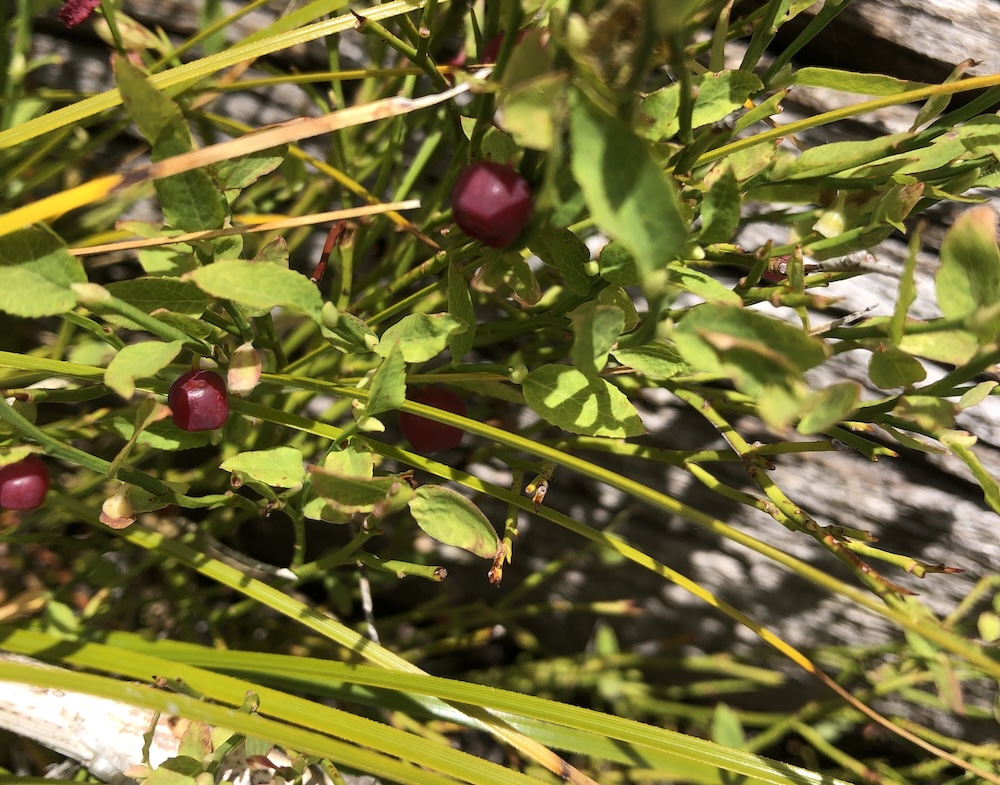
Tiny whortleberry fruits peeping from beneath the leaves. Photo by Allison De Jong.
Listen:
I’d never heard of whortleberries until I met my husband. We were on the first of what would be many hikes to Glen Lake in the Bitterroots, when he stopped, a playful glint in his eye, and began staggering forward in a wobbly, bent-kneed, stumbling walk. I stared in confused amusement.
“Whortleberries,” he said, pointing at a mass of low shrubs scattered throughout the lodgepole pines, creating a soft, textured carpet. Looking closer, I saw miniscule bright-red berries peeking out from the low canopy of tiny green leaves. But I had no idea what these gleaming little berries had to do with his careening, erratic stumble.
If you live in Montana, you probably know about huckleberries. You probably have your favorite huckleberry-picking spots, which you only share with people you really like (and maybe not even them!). But you may not know about the dwarf version that grows at higher elevations: the grouse whortleberry.
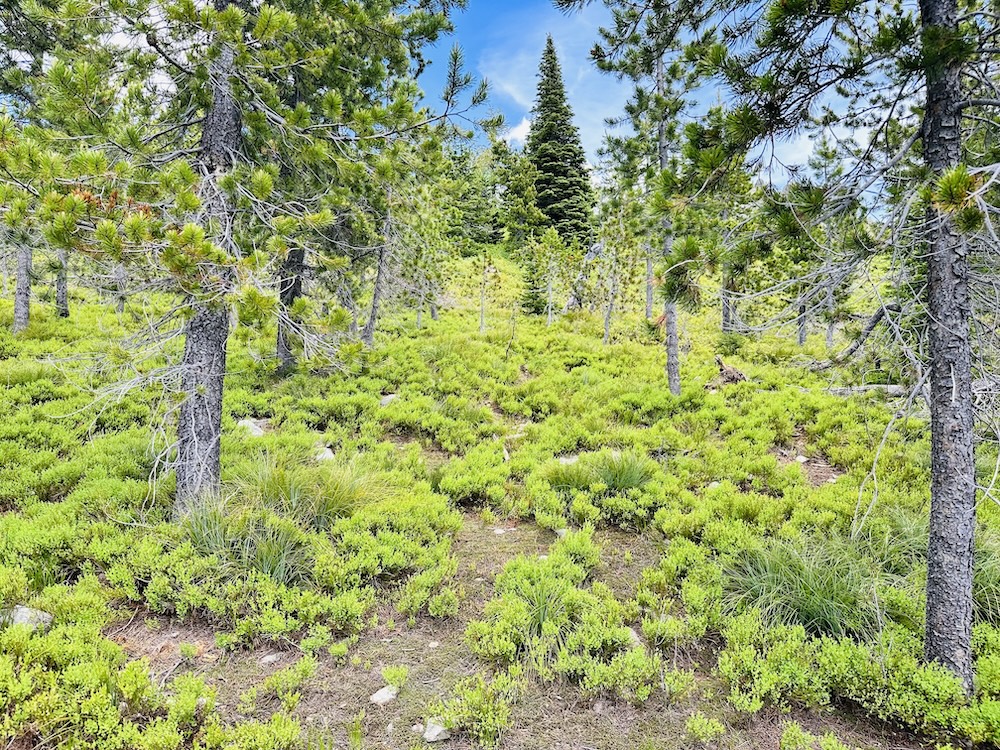
Whortleberry shrubs carpeting the ground beneath lodgepole pines along the Stateline Trail in the Great Burn Recommended Wilderness. Photo by Allison De Jong.
Anyone familiar with our larger huckleberry species will likely recognize the grouse whortleberry (Vaccinium scoparium): it looks like a miniature, adorable version, its short broom-like clusters of zigzaggy stems covered with tiny oval leaves and even tinier bright-red berries, each about the size of a large pin-head. The plants often cluster together, covering the ground with a dense mat of bright green, minute leaves, often growing amongst lodgepole pines, beargrass, subalpine firs. For me, seeing whortleberries is a sign that I am in the high country. Whortleberries are part and parcel of one of my favorite ecosystems, these wild, high-mountain landscapes that I have come to love over the two decades I’ve called myself a Montanan.
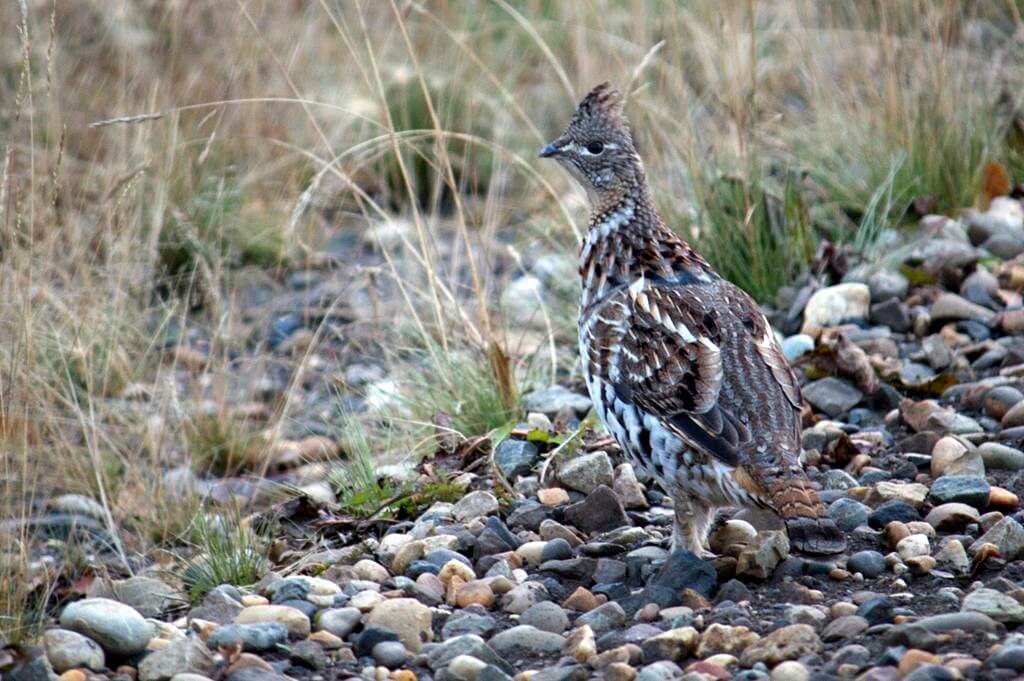
Grouse whortleberries are an important food source for—you guessed it—grouse, as well as other bird species and many small mammals, from chipmunks and squirrels to foxes and skunks. Bears will eat both the berries and the foliage. The summer foliage is also an important food source for other large mammals: mountain goats, mule deer, moose, elk. When you’re hungry, even a small plant—and its even smaller fruit—is better than nothing.
I have sampled whortleberries many times—a couple here, a smattering there, enough for their tart flavor to burst deliciously on my tongue. When I’m lucky, I’ve found some as large as small huckleberries. But they are truly miniscule berries, and to collect even a small handful takes more time than most serious pickers want to spend—much less a casual hiker. Botanist Leonard Ballek wrote dryly that “Collection of the very small berries can be a tedious task.” I’ve long thought that collecting enough to bake someone a whortleberry pie would be the ultimate sign of true love.
But maybe it’s enough to bring the people you love to the places whortleberries can be found…and teach them to whortle, as my husband did for me. Whortleberry. It’s a funny little word, its roots in the Anglo-Saxon wyrtil, meaning, simply, “small shrub.” And this funny little word inspired my playful husband to match it to an erratic, wobbling stumble that can’t help but draw forth laughter from anyone who gets to witness it. I whortle with caution. Greg whortles with an abandon I’m still trying to emulate.
Over nearly two decades of walking amongst the whortleberries, these plants have come to mean so much more than their tangy bright fruits. They’re a reminder to not take myself too seriously. To tap into the joy and fun and play we’re meant to have and hold onto, no matter how old we get. To give myself permission to be silly, to be goofy, to let go.
So when I find myself in whortleberry territory, I let the delight of being in a beloved place take over. I stagger. I wobble. I whortle.
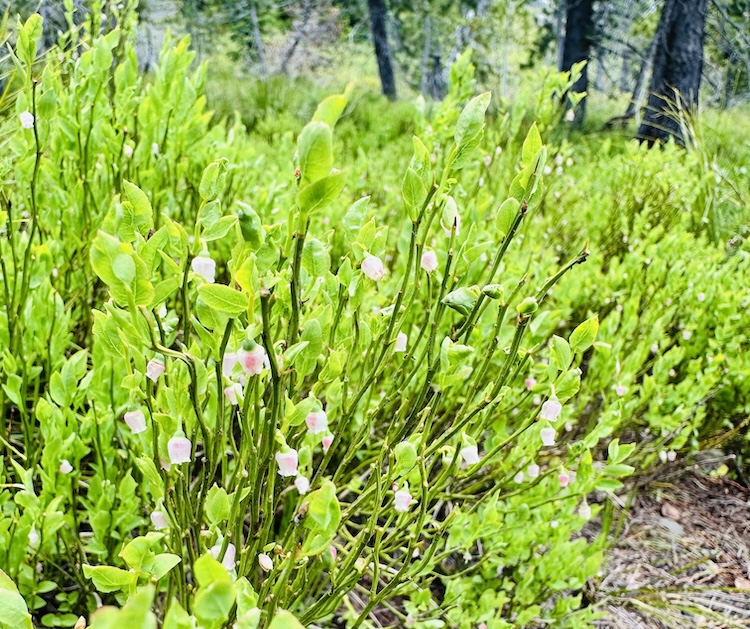
Members of the heath family, whortleberries have delicate, urn-shaped flowers. Photo by Allison De Jong.
Every week since 1991, Field Notes has inquired about Montana’s natural history. Field Notes are written by naturalists, students, and listeners about the puzzle-tree bark, eagle talons, woolly aphids, and giant puffballs of Western, Central and Southwestern Montana and aired weekly on Montana Public Radio.
Click here to read and listen to more Field Notes. Field Notes is available as a podcast! Subscribe on Apple Podcasts or wherever you listen to podcasts.
Interested in writing a Field Note? Contact Allison De Jong, Field Notes editor, at adejong [at] montananaturalist [dot] org or 406.327.0405.
Want to learn more about our programs as well as fun natural history facts and seasonal phenology? Sign up for our e-newsletter! You can also become a member and get discounts on our programs as well as free reciprocal admission to 300+ science centers in North America!