American Pikas: Little Chief Hares of the West
By Allison De Jong
Broadcast on 9.2 & 9.5.2026
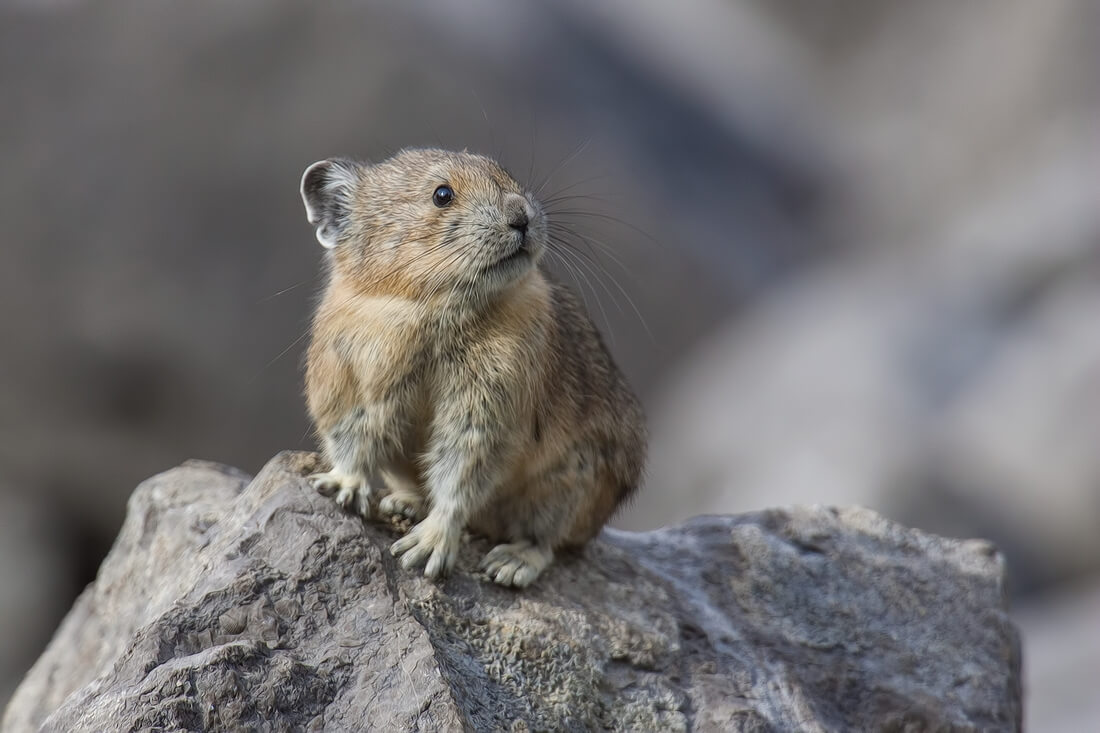
A pika perches on a rock at Medicine Lake in Jasper National Park, Alberta. Photo by Alan D. Wilson, naturespicsonline.com. CC BY-SA 3.0.
Listen:
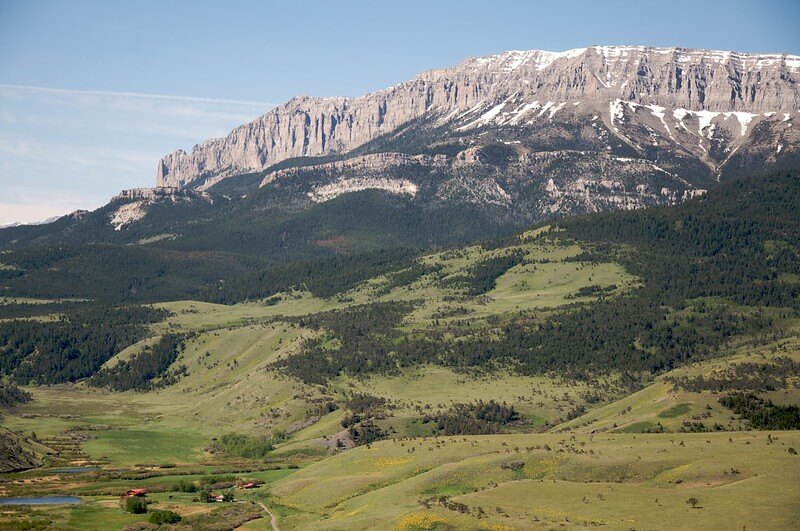
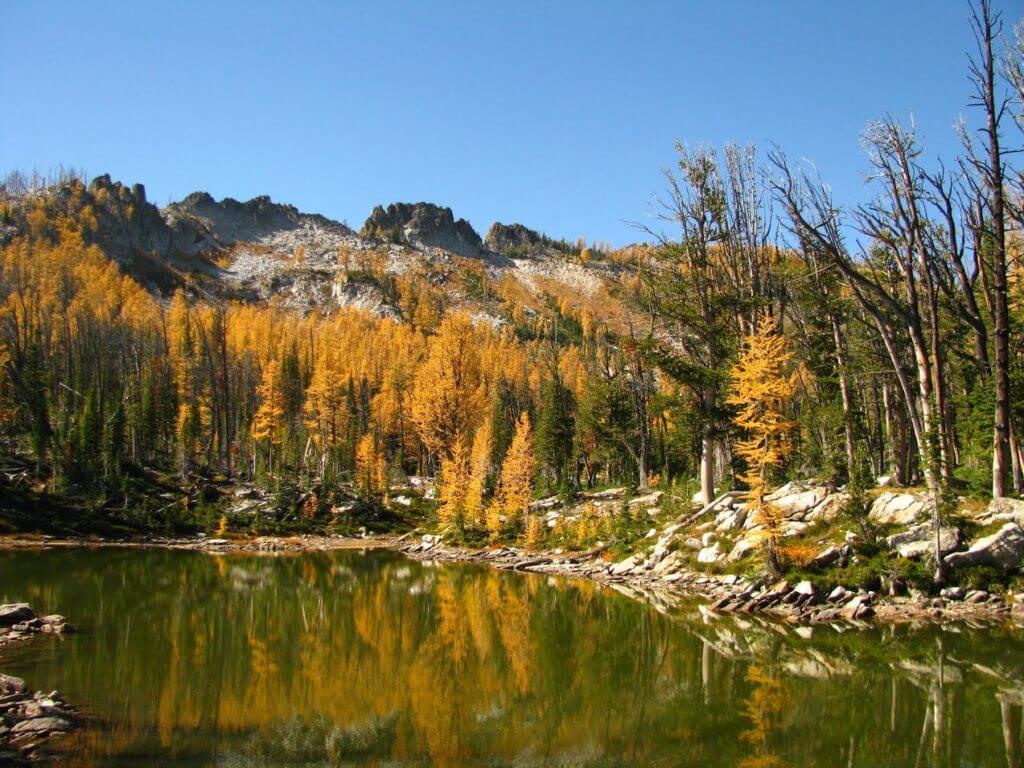
The first time I heard a pika, I was hiking along a talus slope on the Bass Creek trail in the Bitterroot Mountains. I thought the short, shrill sound was some kind of bird call until my husband whispered excitedly, “That’s a pika!” Following his pointing finger, my eyes fell upon an adorable grey ball of fur camouflaged among the surrounding rocks, and, as I watched, it darted out of sight beneath the tumbled scree.
Since then, I have come across this smallest member of the rabbit order on many outdoor explorations, and am delighted every time. Also called “rock rabbit” or, my favorite, “little chief hare,” the American pika (Ochotona princeps) is one of about 30 species of pika worldwide, two of which are found in North America. They make their homes on talus slopes in alpine ecosystems, and can be found across the West, from California and New Mexico north to Alberta and British Columbia. I more often hear than see them, but it’s always worth the time it takes to spot them amidst their rocky habitat. Pikas are about the size of a large potato, and at first glance rather resemble one with their grayish-brown coloring and plump little bodies. Up close, you’ll notice round ears, whiskered nose, and tiny paws — I’m pretty sure the scientific term for their appearance is “ridiculously cute.”
But pikas aren’t just cute. They’re extremely industrious, collecting plant material through the summer and early fall to sun-dry and form into haystacks to supplement their winter diet. I’ve seen them with their mouths full of plants as they scramble across the scree slopes. Unlike many mountain animals, pikas neither migrate nor hibernate, so they need to gather enough food to get them through a winter of wakefulness. Their dense fur helps them survive the cold temperatures, as does spending most of the season in dens and tunnels in the protected subnivean layer beneath the snow. If they haven’t stored enough food, or if the winter stretches long, pikas will forage for lichens and cushion plants under the snow until spring melt.
Aside from the challenges of survival in high mountain landscapes, pikas are now faced with the increasingly pervasive threat of our changing climate. With their thick fur and high core body temperature, pikas are adapted to cold weather. And they are extremely sensitive to heat. They can overheat and die in as little as six hours if exposed to temperatures above 78 degrees Fahrenheit.
Because they are sensitive to even small changes in temperature and occupy such a narrow ecological niche, pikas are an ideal indicator species for climate change and its environmental and biological effects. Several studies on pika populations and habitat have been conducted in recent years, with a clear connection emerging between warming temperatures and decreasing pika populations.
Pikas are essentially island dwellers. They live in alpine areas; they do not migrate; they do not travel long distances—some spend their entire lives within a half-mile radius – and thus they remain largely in isolated pockets scattered across the West. As average summer temperatures go up, pikas have no choice but to move up the mountainsides, much as a creature living on an island must move to higher ground when water levels rise. If temperatures rise high enough, pikas will have nowhere to go.
Since that first pika I saw scampering on a rocky slope in the Bitterroot Mountains, these “little chief hares” have become one of my favorite creatures. I am worried for their future, yet I am inspired by their hardiness, their ability to thrive in less-than-hospitable environments. And I try to listen to what they have to teach us:
Make hay while the sun shines.
Be cute.
Stay cool.
Enjoy the fruits of your labor.
Waste nothing.
Work hard, and know when to rest.
Enjoy the high country.
Find your place, and make it home.
Use your voice.
Every week since 1991, Field Notes has inquired about Montana’s natural history. Field Notes are written by naturalists, students, and listeners about the puzzle-tree bark, eagle talons, woolly aphids, and giant puffballs of Western, Central and Southwestern Montana and aired weekly on Montana Public Radio.
Click here to read and listen to more Field Notes. Field Notes is available as a podcast! Subscribe on Apple Podcasts or wherever you listen to podcasts.
Interested in writing a Field Note? Contact Allison De Jong, Field Notes editor, at adejong [at] montananaturalist [dot] org or 406.327.0405.
Want to learn more about our programs as well as fun natural history facts and seasonal phenology? Sign up for our e-newsletter! You can also become a member and get discounts on our programs as well as free reciprocal admission to 300+ science centers in North America!