Tenacious Beauty: In Awe of Alpine Wildflowers
By Allison De Jong
Broadcast 7.15 & 7.18.2026
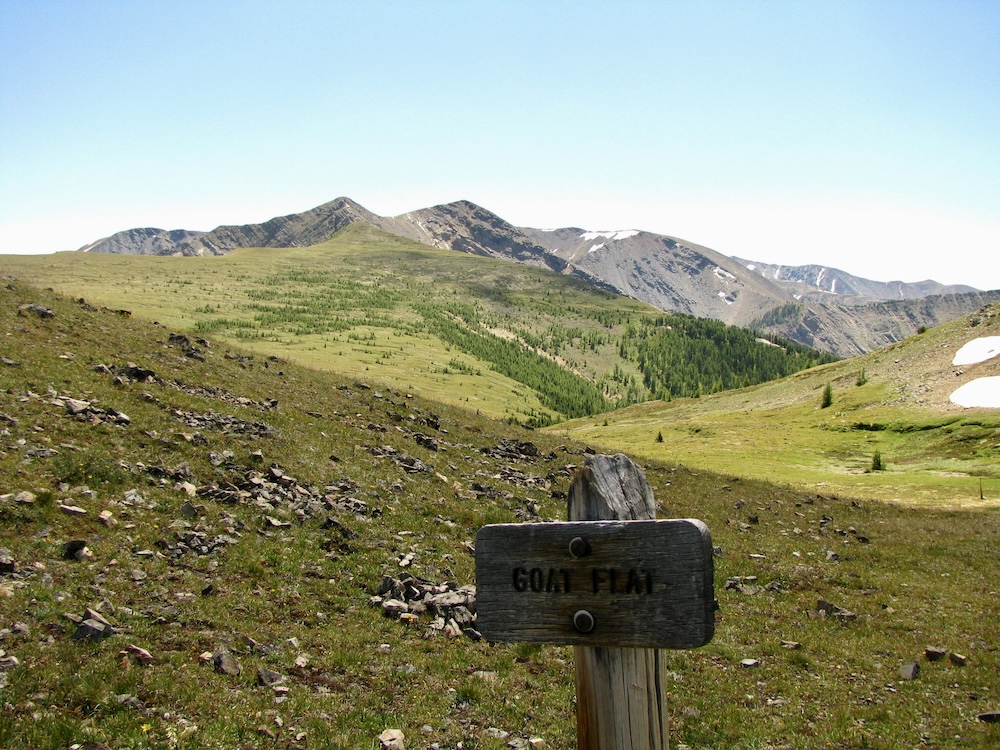
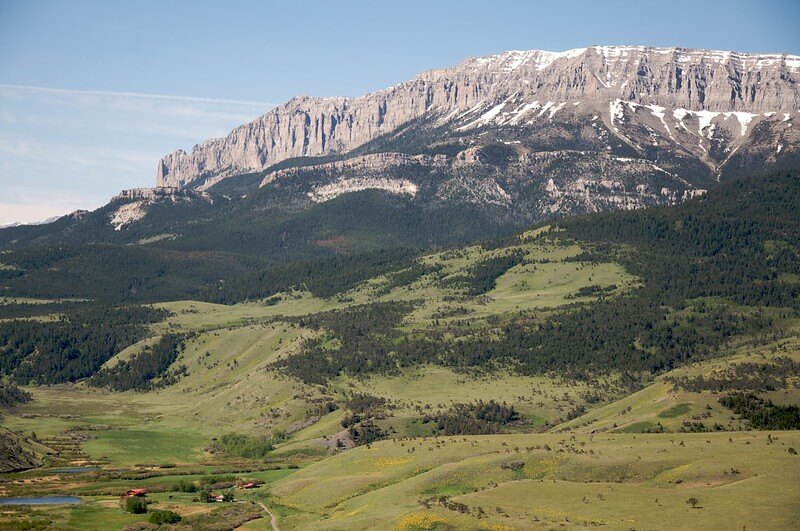
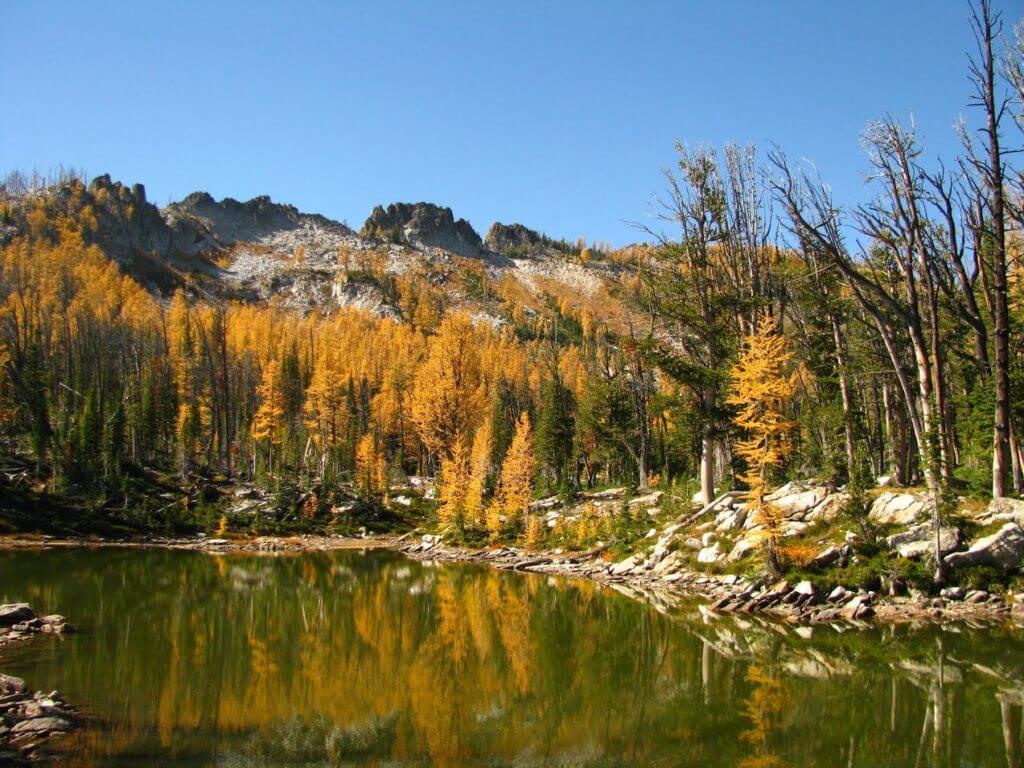
Goat Flat, 9,500 feet in elevation, in the Anaconda-Pintler Wilderness. Photo by Allison De Jong.
Listen:
It was a sunny, gorgeous Sunday in late July. My husband, two friends and I had scattered ourselves across the broad alpine meadow of Goat Flat in the Anaconda-Pintler Wilderness, noses to the ground, peering at the myriad tiny wildflowers strewn across the landscape; most of the bright bits of color reached no higher than the top of our hiking boots. From a distance the meadow looked fairly uniform—low, matted plants, flashes of intermingled colors—but upon closer inspection, the flowers revealed dozens of unique shapes and shades.
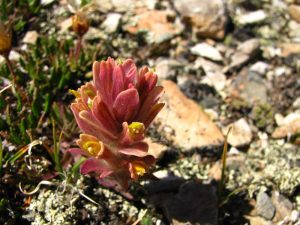
Paintbrush at Goat Flat. Photo by Allison De Jong.
Paintbrush, their colorful bracts low to the ground, painted a vivid magenta. A plant with a tall reddish stem and a spiraling cluster of white flowers on top: alpine bistort, which I’d never seen before. Another white flower, six-petaled, with a circle of green on the inside: mountain death-camas, so toxic that the Okanagan people mashed up the bulb and used its poison to tip their arrows.
The tundra is a harsh environment, and the species that live there have, through necessity, adapted to be tough little buggers. Their home is scoured by wind, subject to bitter temperatures (on both extremes), and exposed to intense solar radiation. Not only that, it’s covered with snow eight to nine months out of the year, making for a very short growing season; even during the summer months frost can descend at any time. Yet these little plants make do and even thrive. And when I knelt down for a closer look, I was reminded that toughness in no way precludes beauty—up close, these tiny flowers were vivid and breathtaking.
Crouched down, I also realized that there was a difference between the conditions at human level and the conditions at alpine wildflower level. The breeze I felt standing up was greatly diminished near the ground. The sunshine beat down. The ground was warm, its heated surface sending up an earthy fragrance. I could understand why the plants here had adapted to be shorter than their lower-altitude counterparts—in this environment, a few inches is the difference between survival and extinction.
Alpine plants have other adaptations as well. In a windy environment, wind-dispersed seeds are an advantage, so many tundra plants have seeds that are winged, or hairy, or tiny and lightweight. The leaves of some alpine plants, such as louseworts, some saxifrages, and Sitka valerian, have deep red and purple pigmentation to warm themselves more quickly when the sun comes out. Another common adaptation is hairiness, which can provide protection from the sun, keep moisture from escaping, and even create a greenhouse effect by holding in heat and warming the plant.
The more I ponder the array of alpine plant adaptations, the more I wonder if my perception of the tundra as harsh is completely accurate. It is harsh to me—I could not survive here. But if I were a plant like a mountain avens, with bowl-shaped flowers that reflect and focus sunlight to speed up growth and also provide a warm, enticing spot for pollinators to land, perhaps I would not perceive a meadow at 9,500 feet above sea level as such a challenging place.
Visiting this remote, wild place reminded me that my human perspective is limited. To the flowers that bloom there, I am just a shadow that falls across their petals or a shoe that crushes. I am but a brief visitor in a cycle of sun and cold and wind that has spanned millennia.
What might future years bring to alpine habitats such as this? Our changing climate threatens the survival of the flora and fauna that make their homes in places like Goat Flat. Yet I find hope in the fact that the plants in this meadow have developed so many creative adaptations to conditions we humans consider harsh. I am humbled by their resiliency. And I find in myself a renewed desire to protect their habitats, so that these wild places, and the plants that call them home, will remain to awe future naturalists with their exquisite perseverance.
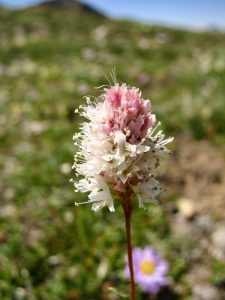
Alpine bistort. Photo by Allison De Jong.
Every week since 1991, Field Notes has inquired about Montana’s natural history. Field Notes are written by naturalists, students, and listeners about the puzzle-tree bark, eagle talons, woolly aphids, and giant puffballs of Western, Central and Southwestern Montana and aired weekly on Montana Public Radio.
Click here to read and listen to more Field Notes. Field Notes is available as a podcast! Subscribe on Apple Podcasts or wherever you listen to podcasts.
Interested in writing a Field Note? Contact Allison De Jong, Field Notes editor, at adejong [at] montananaturalist [dot] org or 406.327.0405.
Want to learn more about our programs as well as fun natural history facts and seasonal phenology? Sign up for our e-newsletter! You can also become a member and get discounts on our programs as well as free reciprocal admission to 300+ science centers in North America!