A (Winter) Solstice Vignette
By Josh Boling
Broadcast 12.17 & 12.20.2025
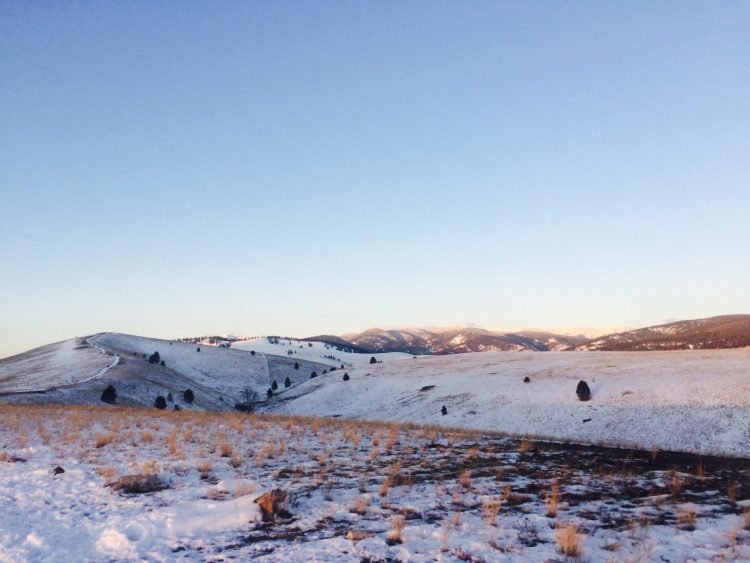
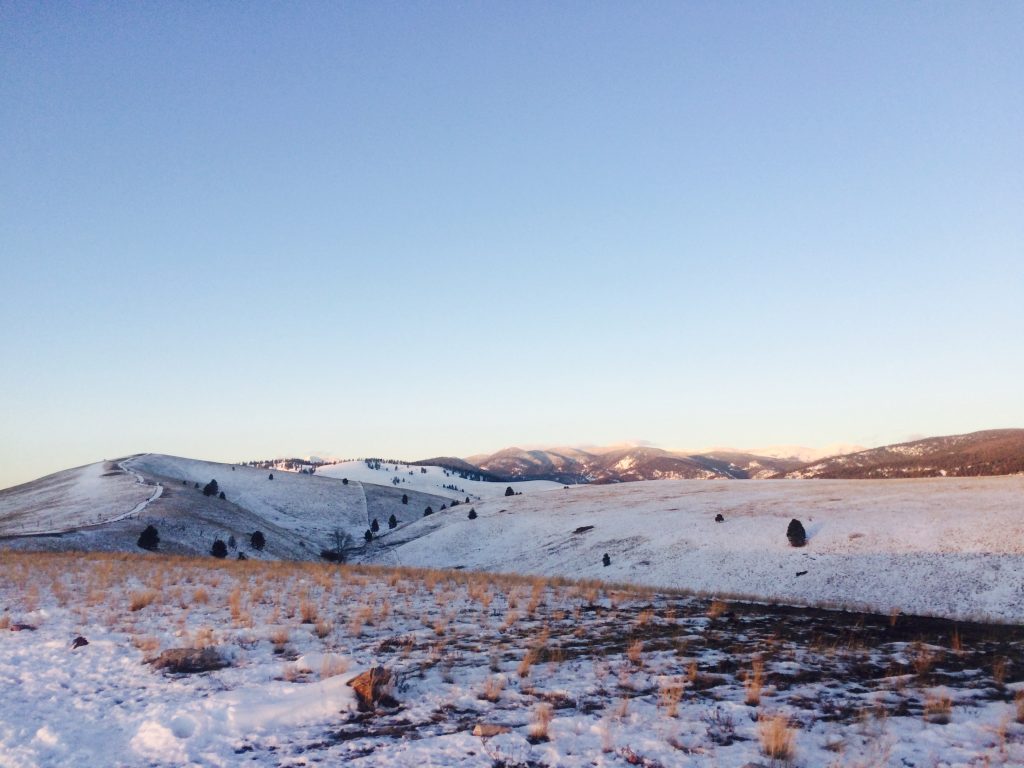
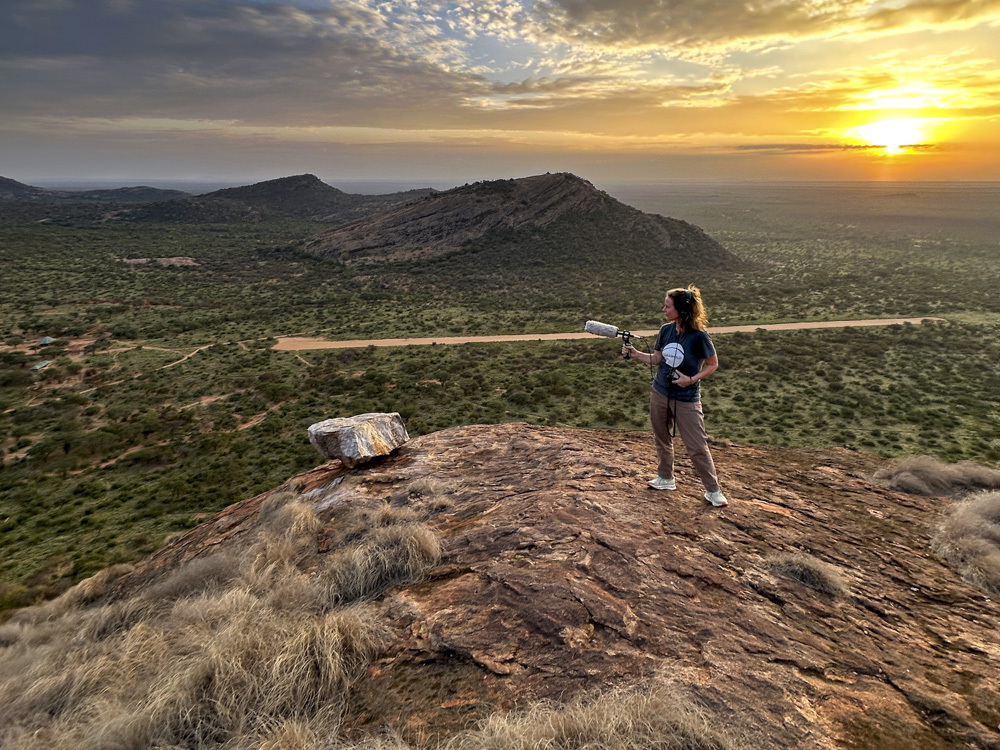
Winter solstice sunset on Waterworks Hill in Missoula. Photo by Allison De Jong.
Listen:
In the frigid dark of long winter nights, we tell stories—stories of thievery, heroism, and light. Raven, Maui, and the Oak King. They are all said to have rescued the sun from darkness for their people, and their deeds remain the whispered subjects around campfires that lead up to the winter solstice. I’d like to tell a story of my own about our calendar’s longest, darkest night and our relationship with it.
The first archaeological evidence we have that points to organized observances of the winter solstice come from the Neolithic period—that era from about 12,000 to 6,500 years ago which hastened the Stone Age into those of Copper and Bronze. The Neolithic coincided with the invention of farming in the Near East; and on the heels of farming came the necessity of a calendar, upon which the new agrarian economy was utterly dependent—for delineating seasons, planting and harvesting crops, and monitoring food stores over winter. We looked to the sky, of course, as we always had, for such insights into the survival of our species. We found familiar patterns there—the ebb and flow of darkness and light that came with the ever-changing arc of the sun. From north to south the sun wanders, from light to dark and warm to cold. We built shrines to its movement. You know their names: Stonehenge and Newgrange; the Goseck circle and Chaco Canyon’s sun dagger. Each culture would create its own method of tracking, observing, and then of celebrating. We built tools and shrines to embody our mythologies.
The Neolithic agrarian economy lived by the sun. As darkness fell on wintry fields, our Stone Age ancestors shared stories about that moment when the light would return, hoping that their characters could hasten the sun. Reverence is a powerful thing. It informs the stories we tell about ourselves—stories of existence balanced on moments. We revere the return of the light when the night is at its darkest and longest. That’s when we send Raven, Maui, or a Celtic tree spirit to bring back the sun—to push away the darkness. That’s the mythology, at least.
Astronomically speaking, the winter solstice is ephemeral. In the northern hemisphere, it occurs at the exact moment when the northern portion of the Earth’s axis is tilted directly away from the sun at its farthest point. This year, in the Mountain West, that moment is Sunday, December 21st, at 8:03 a.m. But astronomy’s geometries and physics are only part of the tale. Our stories are told with an affinity for more than just practical science.
Solstice means “to be still,” to wait for the return of the light. We attach great meaning to it. The cluster of holidays we have in winter worldwide is evidence enough of that. Every culture recognizes, in its own way, the vast significance of this fleeting moment; and those observances connect us through time to the ancestors that first looked up—marking time, checking dates, counting bushels until the next harvest. The solstice is a moment we barely notice, but one that bears immense anticipation. We move right through it at the speed of time—then tell our stories to lend meaning to that time spent moving, from the light through to darkness and back again.
Every week since 1991, Field Notes has inquired about Montana’s natural history. Field Notes are written by naturalists, students, and listeners about the puzzle-tree bark, eagle talons, woolly aphids, and giant puffballs of Western, Central and Southwestern Montana and aired weekly on Montana Public Radio.
Click here to read and listen to more Field Notes. Field Notes is available as a podcast! Subscribe on Apple Podcasts or wherever you listen to podcasts.
Interested in writing a Field Note? Contact Allison De Jong, Field Notes editor, at adejong [at] montananaturalist [dot] org or 406.327.0405.
Want to learn more about our programs as well as fun natural history facts and seasonal phenology? Sign up for our e-newsletter! You can also become a member and get discounts on our programs as well as free reciprocal admission to 300+ science centers in North America!